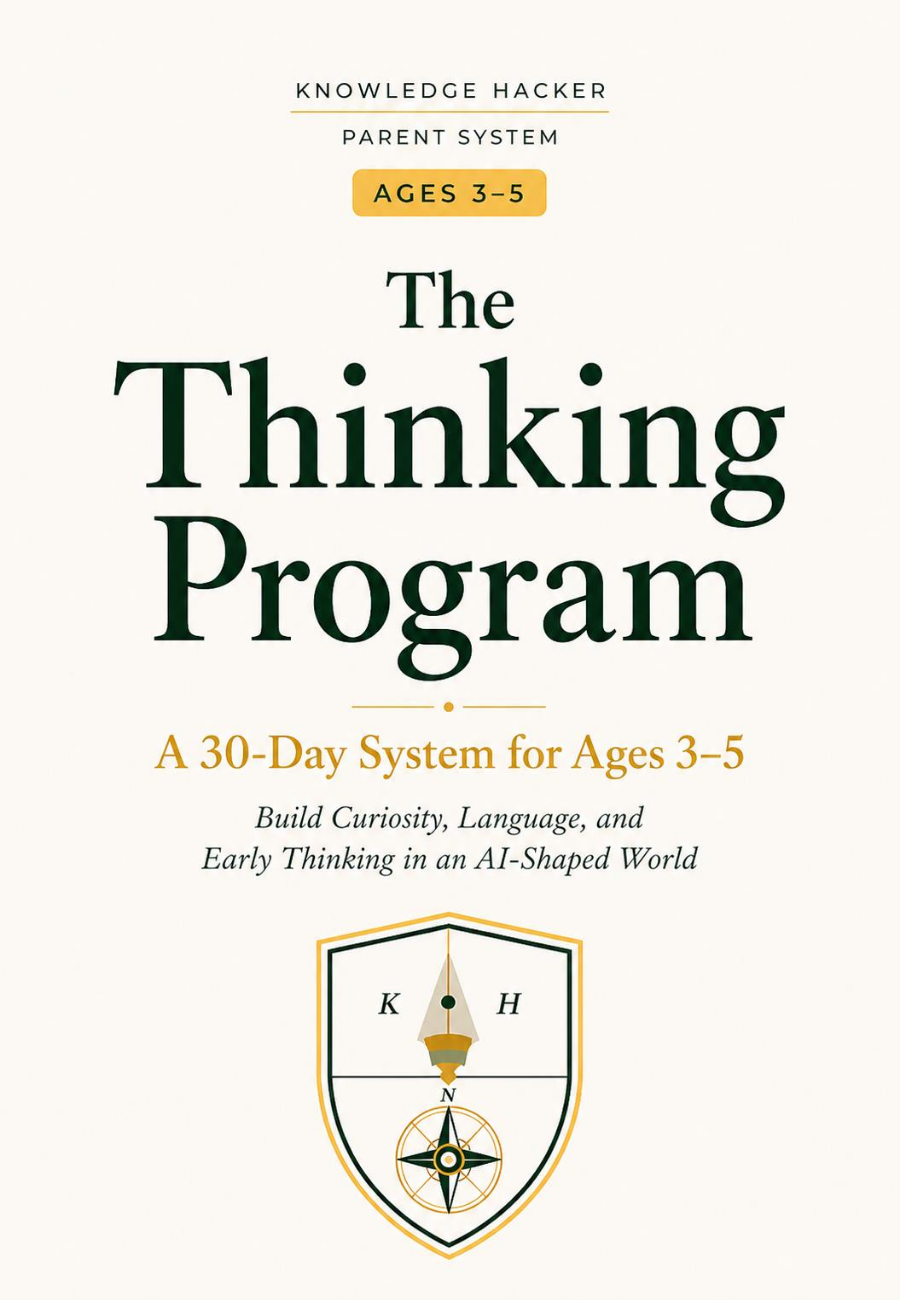
The Thinking Program (3-5 years old)

Ages 3–5  ·  30-Day Programme

The Thinking Program (3-5 years old)

Build curiosity, language, focus, memory, and early thinking skills through ordinary daily play.


Your child does not need more screens, pressure, or complicated lessons.

They need small, consistent moments that help them practise how to notice, remember, pause, explain, adapt, and try again.

The Thinking Program is a 30-day parent-led workbook designed to help children ages 3–5 build the thinking skills that underpin future learning. It turns ordinary moments into calm, playful cognitive development practice.

15–25 minutes a day. Play-based. Parent-led.

No teaching experience required.

$14.99

Digital download — instant access after purchase.

Why early thinking skills matter


The world your child is growing into won't reward simple memorisation. Children will need to think clearly, adapt quickly, ask better questions, solve problems, and learn independently.

But these skills do not appear automatically. They are built through repeated practice in the early years through conversation, movement, memory games, listening, waiting, sorting, noticing, explaining, and trying again.

Bright Children Can Still Struggle

Many children can recognise letters, numbers, and colours but still struggle to stay focused, remember instructions, wait before reacting, or try again after frustration. That is not a sign of being behind. It means their thinking system is still developing.

This Is Not a Worksheet Pack

The Thinking Program is designed to help parents build the skills beneath learning: focus, working memory, listening, reasoning, self-control, flexibility, problem-solving, and confidence through short, playful, practical activities.

The Science Beneath the Play

Built around the early foundations of executive function — attention, working memory, inhibitory control, and cognitive flexibility. Calm, repeated practice in the thinking skills that sit beneath future learning. No pressure. No drilling.

Parents can support that development in simple, powerful ways at home.

No apps. No screens. No academic pressure. No complicated setup. Just small, consistent thinking practice that fits into real family life.

The 30-day weekly structure


Each week targets a distinct brain skill, building progressively so every new skill is supported by what came before. You are not left wondering what to do — the programme gives you a clear, parent-friendly structure to follow every day.

Week 1 · Focus & Attention

Noticing & Concentrating

Your child practises noticing details, listening carefully, concentrating, and staying mentally engaged. This week builds the foundation for learning: the ability to pay attention long enough for thinking to happen.

Week 2 · Memory & Control

Remembering & Waiting

Your child practises remembering steps, holding information in mind, pausing, waiting, and following directions. This week supports working memory and early self-regulation.

Week 3 · Flexibility & Reasoning

Adapting & Explaining

Your child practises changing rules, trying new ways, comparing, sorting, explaining, and adapting. This week helps children become more flexible, curious, and confident when things change.

Week 4 · Higher-Order Thinking

Planning & Problem-Solving

Your child practises planning, problem-solving, explaining choices, and thinking more independently. This week brings all the skills together into deeper thinking practice.

How each daily activity works


Every daily guide is designed to be simple for the parent and playful for the child. Each daily page includes:

What to do

Clear step-by-step instructions so you know exactly how to run the activity with no preparation needed.

Make it harder

Three challenge levels so the activity can grow with your child as they improve across the 30 days.

Age pathway

Guidance for adapting the activity for younger and older children within the 3–5 age range so it works wherever your child is right now.

What you need

Most activities use no materials or simple household objects. Nothing to buy, nothing to prepare.

What to say

Parent scripts that help you guide your child's thinking without over-explaining or giving away answers.

Reflection

A short parent reflection to help you notice progress, frustration, confidence, and growth provideing week by week tracking.

What the programme builds


Over 30 days, your child practises the early executive-function and thinking skills that support learning, behaviour, confidence, and independence.

Focus & Attention

Helping your child notice details, listen carefully, stay with a task, and resist distraction.

Working Memory

Helping your child hold information in mind, remember steps, follow directions, and recall what changed.

Self-Control

Helping your child pause, wait, listen, and respond with more intention rather than reacting immediately.

Cognitive Flexibility

Helping your child shift rules, try another way, adapt to change, and see more than one solution.

Reasoning Language

Helping your child explain what they notice, what happened, what changed, and why they think something.

Problem-Solving

Helping your child try, adjust, repeat, and build confidence through small, manageable challenges.

The goal is not pressure or academic performance.

The goal is calm, repeated practice in the thinking skills that underpin future learning.

Inside the 30-day system


The Thinking Program gives you a clear, parent-friendly structure to follow so you are never left wondering what to do each day.

30 daily activity guides
4 weekly brain-skill modules
Parent scripts and thinking prompts
Age pathways for younger and older children
"Make it harder" challenge levels
Reflection prompts for parents
Progress tracking pages
Parent guidance pages
Question prompts that build thinking language
Notes sections
A calm, premium format
Instant digital download

Format: Digital PDF  ·  Age range: 3–5 years  ·  Time: 15–25 min/day

Each daily page gives you 1–2 simple activities that can be completed in around 15–25 minutes. Materials are mostly household objects or nothing at all.

Track real progress — week by week


The programme uses a simple rhythm that helps parents see what is improving, what still feels hard, and where the child needs more support.

Daily Training

Weekly Check-In

Reflection

Adjust & Repeat

Small changes appear first. Over time, you may begin to notice your child:

Listens more carefully
Stays focused slightly longer
Pauses before interrupting
Remembers more steps
Becomes more willing to try
Asks better questions
Explains ideas more clearly
Handles small frustration better

These are early signs that thinking is developing.

You are already your child's first thinking partner


You do not need to become a teacher to shape your child's development. The way you ask questions, wait for answers, guide attention, respond to mistakes, and encourage trying again can shape how your child learns to think.

The Thinking Program gives you the structure and language to make those moments more intentional.

Not more complicated.

Not more pressured.

Just more purposeful.

Who this is for


The Thinking Program is for parents who want to:

Build thinking skills before formal school demands increase
Support focus, memory, listening, and reasoning at home
Reduce reliance on screens and passive entertainment
Use ordinary moments more intentionally
Help their child become more flexible and independent
Create a calm 30-day rhythm of parent-led learning

"My child is bright, but they struggle to listen, wait, focus, or follow through." — If you have ever thought this, this programme was made for you.

Who this is not for

This may not be the right fit if you want a worksheet pack your child completes alone, academic drills, screen-based lessons, or a programme focused only on letters and numbers. The Thinking Program works best when a parent or caregiver participates, observes, and gently guides the child through each activity.

Frequently asked questions


No. The Thinking Program is a parent-led cognitive development programme. It uses playful activities, guided questions, parent scripts, and reflection prompts to help children practise real thinking skills.

No. The programme is designed for ages 3–5 and does not require independent reading or writing. The parent guides the activities through conversation, play, movement, listening, and observation.

Most sessions take around 15–25 minutes. You can complete one or two activities depending on your child's energy and attention that day.

No. Most activities use simple household objects, toys, movement, listening, memory games, or everyday routines.

Yes. It can be used at home, alongside nursery, as part of a homeschool rhythm, or as a gentle after-school thinking routine.

That is normal. The aim is not perfection — the aim is gentle practice. The workbook includes age pathways and challenge levels so you can make each activity easier or harder based on your child that day.

Yes, especially if your children are close in age. You can adjust the challenge level using the "Make It Harder" and age pathway sections for each child.

Ages 3–5  ·  30-Day Programme

The Thinking Program (3-5 years old)

Start small. Build the foundations. Raise a thinker.

You do not need a complicated curriculum.

You do not need to teach like a school.

You only need a few intentional minutes each day.

The Thinking Program provides the structure and activities which build the thinking skills that matter.

$14.99

Digital download — instant access after purchase.

Get the Knowledge Hacker newsletter

Practical insights for professionals, students, and parents. No fluff.